Compassionate Care. Advanced Cardiac Treatment
TEST YOUR HEART. UNDERSTAND YOUR LIMITS. CARE WITH CONFIDENCE.
TMT (Stress Test)
A monitored exercise test that shows how your heart responds to physical activity and helps assess symptoms, exercise capacity, heart rhythm and possible reduced blood flow to the heart.
Monitored Treadmill Testing
ECG & Heart Rhythm Assessment
Exercise Capacity Evaluation
Personalized Cardiac Assessment
Suspected Heart Attack?
Don't Wait. Every Minute Matters.
Understanding TMT (Stress Test)
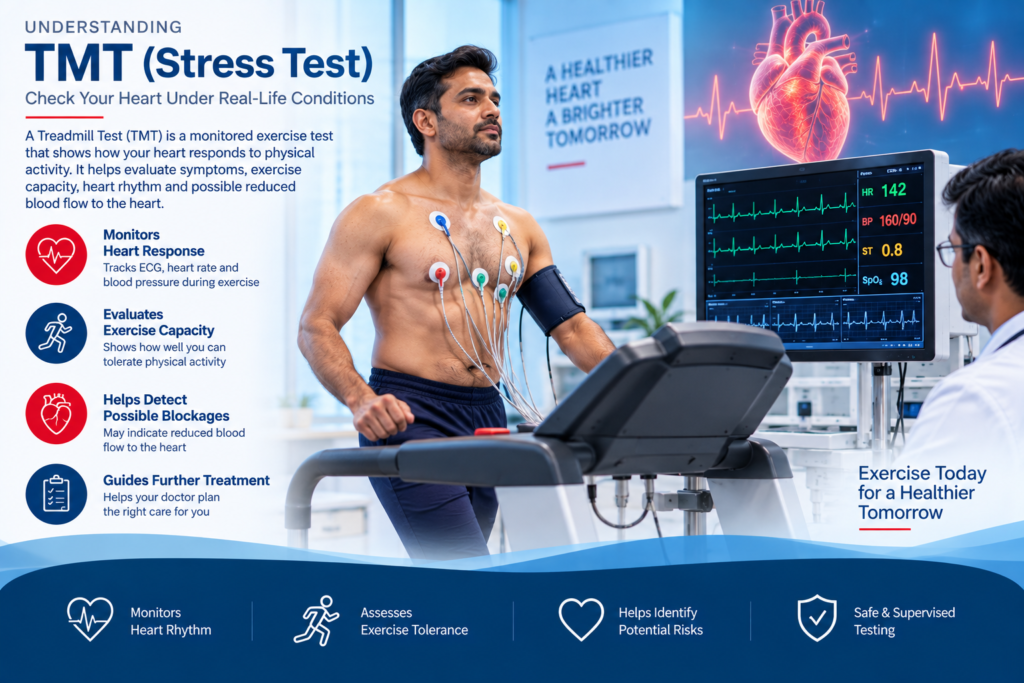
A TMT, or Treadmill Test, is a type of exercise stress test that evaluates how the heart responds when it has to work harder during physical activity. As exercise intensity increases, the heart requires more oxygen and blood flow, allowing the medical team to observe how the heart responds.
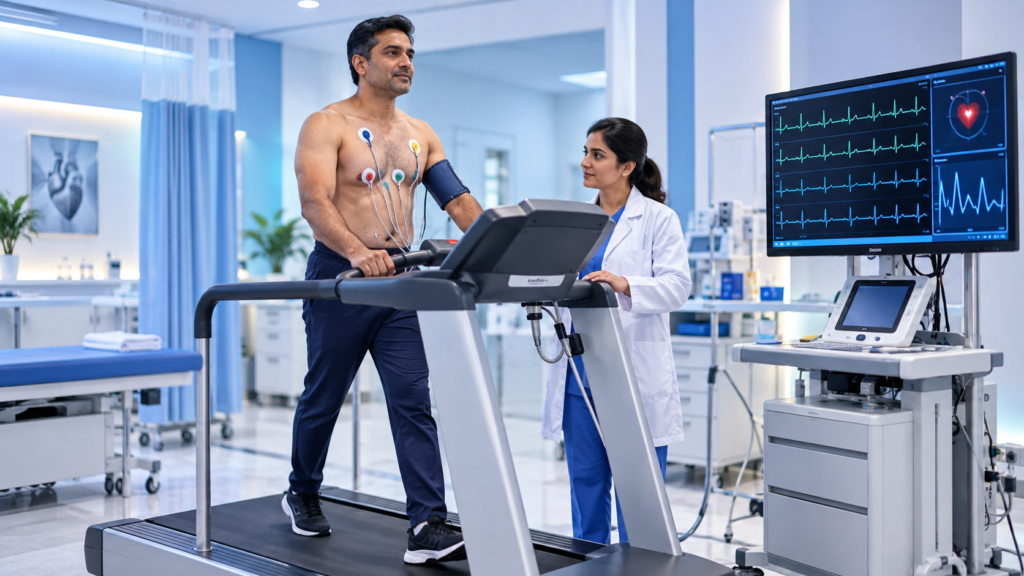
During the test, you walk on a treadmill while your heart rate, rhythm, blood pressure and ECG are monitored. The speed and incline of the treadmill are gradually increased according to the test protocol and your ability to exercise.
TMT may be recommended when a doctor needs to evaluate symptoms such as chest pain, shortness of breath or lightheadedness, or when there is a need to assess possible coronary artery disease. It can also provide information about exercise capacity and certain exercise-related rhythm abnormalities.
The test is performed under medical supervision, and the exercise can be stopped if you develop concerning symptoms, become too tired to continue or if the monitoring shows a reason to stop. The results are interpreted along with your symptoms, medical history and other cardiac investigations.
Our Approach
Comprehensive Care at Every Step
Pre-Test Cardiac Assessment
Your symptoms, medical history, medications and previous cardiac investigations are reviewed to determine whether an exercise stress test is appropriate.
ECG & Vital Monitoring
Electrodes are placed on the chest to continuously monitor your heart's electrical activity while heart rate and blood pressure are also assessed.
Controlled Treadmill Exercise
You walk on a treadmill with the workload gradually increased according to the test protocol and your physical ability.
Symptom Assessment
The medical team monitors for symptoms such as chest discomfort, breathlessness, dizziness, unusual fatigue or other changes during exercise.
Exercise Capacity Evaluation
The test provides information about how your heart and body respond to increasing physical activity and how well you tolerate exercise.
Results & Further Care
The findings are reviewed with your symptoms and other clinical information to determine whether further cardiac evaluation or treatment may be appropriate.
What Happens During a TMT?
Dr. Himanshu Parashar
MBBS, MD(Medicine), DNB(Cardiology), MCSI, IAMACC(America)
Before the test, your healthcare team will review your medical history, symptoms and medicines and provide any specific preparation instructions. You may be advised to wear comfortable clothing and suitable footwear for walking or exercise. Avoiding a heavy meal before an exercise ECG may also be advised depending on your test instructions.
Small sticky electrodes are placed on your chest and connected to an ECG machine. A blood-pressure cuff is also used to monitor your blood pressure during the test. You then begin walking slowly on a treadmill.
As the test continues, the treadmill speed and incline are gradually increased so that your heart has to work harder. Your ECG, heart rate, blood pressure, breathing and symptoms are monitored throughout the test. You should immediately tell the medical team if you experience chest discomfort, significant breathlessness, dizziness or any other concerning symptom.
The test can be stopped at any time if you need to stop or if the healthcare team identifies a reason to end the exercise. After exercise, you will rest while your heart rate and blood pressure are monitored during recovery.
TMT (Stress Test) – Frequently Asked Questions
When is a TMT recommended?
A TMT may be recommended to evaluate certain symptoms such as chest pain or shortness of breath, assess possible coronary artery disease, evaluate exercise capacity or investigate certain heart rhythm problems that may occur during physical activity.
How is a TMT performed?
You walk on a treadmill while ECG, heart rate and blood pressure are monitored. The exercise intensity is gradually increased while the medical team observes your response and any symptoms.
Do I need to prepare before a TMT?
Preparation instructions can vary. You may be advised to wear comfortable clothes and walking shoes and avoid a heavy meal before the test. Your doctor may also give specific instructions regarding medications, so do not stop any prescribed medicine unless your healthcare team tells you to.
What are the benefits of a TMT?
TMT provides information about how your heart responds to exercise. It can help evaluate symptoms during physical activity, assess exercise capacity and provide information that may help identify possible reduced blood flow or exercise-related rhythm abnormalities.
Is TMT the same as a normal ECG?
No. A resting ECG records the heart’s electrical activity while you are at rest. A TMT records ECG changes and other responses while your heart is working harder during exercise.
Our Location
Expert Cardiac Care Near You
- Monday to Saturday
- 10 AM to 4 PM
Supporting Better Heart Health.
Book a Cardiology Consultation