Compassionate Care. Advanced Cardiac Treatment
PREVENT. PROTECT. PRESERVE.
Preventive Cardiology
Proactive heart care focused on identifying cardiovascular risk factors early, understanding your individual heart-health profile and guiding practical steps to reduce future cardiac risk.
Personalized Heart Risk Assessment
Early Risk Identification
Lifestyle & Risk-Factor Management
Long-Term Heart Health Planning
Suspected Heart Attack?
Don't Wait. Every Minute Matters.
Understanding Preventive Cardiology

Preventive cardiology focuses on protecting heart health before a serious cardiovascular problem develops. It involves understanding your individual risk factors and taking appropriate steps to reduce the likelihood of future heart disease.
Risk factors such as high blood pressure, high cholesterol, diabetes, smoking, excess weight, physical inactivity and family history can contribute to cardiovascular disease. Some risk factors may have no obvious symptoms, making regular assessment important.
A preventive cardiology evaluation looks at your medical history, lifestyle, symptoms when present and relevant cardiovascular risk factors. Depending on your individual situation, your doctor may recommend blood pressure assessment, cholesterol testing, blood sugar evaluation, ECG or other cardiac investigations.
The goal is not simply to identify risk, but to create a practical and personalized plan for protecting your heart through appropriate lifestyle measures, risk-factor management and regular follow-up.
Our Approach
Comprehensive Care at Every Step
Cardiovascular Risk Assessment
A detailed review of your personal health history and factors that may influence future heart-health risk.
Blood Pressure Management
Assessment and appropriate management of high blood pressure as an important cardiovascular risk factor.
Cholesterol & Lipid Management
Evaluation of cholesterol and lipid levels and guidance regarding appropriate management.
Diabetes-Related Heart Risk
Assessment of cardiovascular risk associated with diabetes and related metabolic factors.
Lifestyle & Heart-Healthy Habits
Practical guidance on physical activity, healthy eating, weight management, smoking avoidance and other heart-protective habits.
Long-Term Preventive Follow-up
Regular reassessment helps monitor risk factors and adjust the prevention plan when needed.
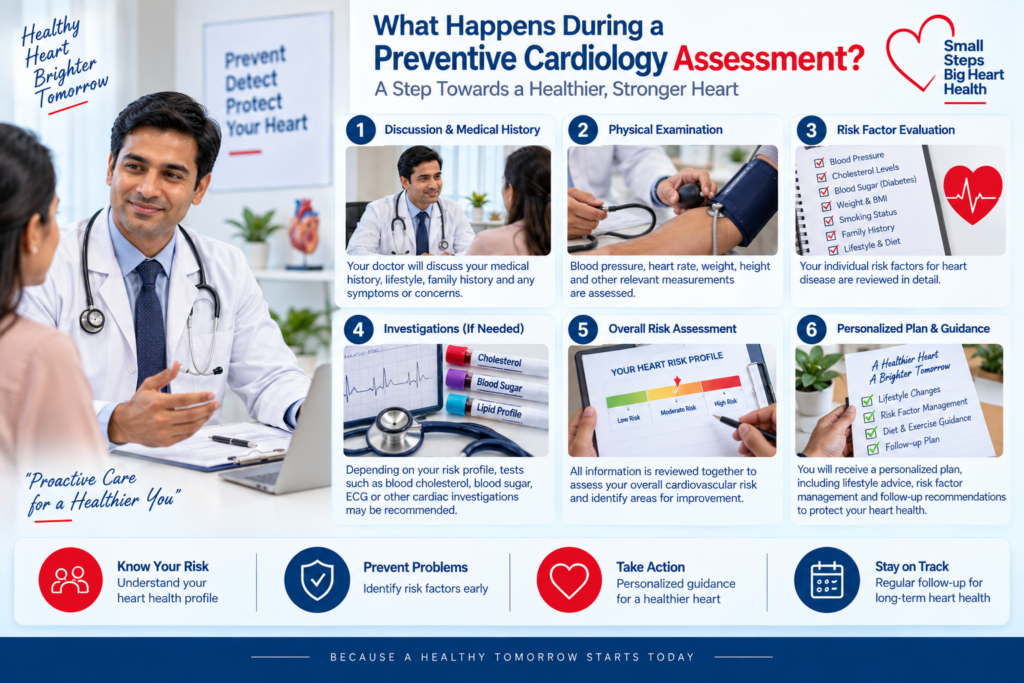
What Happens During Preventive Cardiology?
Dr. Himanshu Parashar
MBBS, MD(Medicine), DNB(Cardiology), MCSI, IAMACC(America)
Your evaluation begins with a discussion about your medical history, lifestyle, previous health problems, medications and any symptoms or concerns you may have. Your doctor may also ask about family history and other factors that can influence cardiovascular risk.
Blood pressure, weight and other relevant health measurements may be assessed. Depending on your individual risk profile, your doctor may recommend investigations such as cholesterol and blood sugar testing or cardiac tests such as an ECG.
The results are considered together rather than relying on a single measurement. Your doctor assesses the overall cardiovascular risk profile and identifies areas where preventive intervention may be beneficial.
You will then receive personalized guidance based on your individual needs. This may include lifestyle changes, management of blood pressure or cholesterol, diabetes-related risk management, additional cardiac evaluation or periodic follow-up.
Preventive Cardiology– Frequently Asked Questions
Who should consider preventive cardiology?
Preventive heart assessment can be useful for adults who want to understand their cardiovascular risk, particularly those with risk factors such as high blood pressure, high cholesterol, diabetes, excess weight, physical inactivity, smoking or a family history of heart disease.
What happens during the assessment?
Your doctor reviews your medical history, lifestyle, family history and cardiovascular risk factors. Blood pressure and other relevant measurements may be assessed, with additional tests recommended when clinically appropriate.
Do I need cardiac tests?
Not everyone requires the same tests. The investigations recommended depend on your symptoms, risk factors, medical history and clinical assessment.
Can preventive cardiology help if I feel completely healthy?
Yes. Some cardiovascular risk factors may exist without noticeable symptoms. Preventive assessment can help identify these factors and support appropriate early management.
What are the benefits?
Preventive cardiology can help you understand your cardiovascular risk, identify modifiable risk factors and develop a personalized approach to protecting your heart health over the long term.
Our Location
Expert Cardiac Care Near You
- Monday to Saturday
- 10 AM to 4 PM
Supporting Better Heart Health.
Book a Cardiology Consultation