Compassionate Care. Advanced Cardiac Treatment
EXPERT. TIMELY. COMPASSIONATE.
Heart Attack Treatment
Emergency cardiac care focused on restoring blood flow, protecting heart muscle and supporting better recovery.
Prompt Evaluation
Angioplasty & Stenting
Advanced Cardiac Care
Personalized Follow-up
Think It's a Heart Attack?
Don't Wait. Every Minute Matters.
Understanding Heart Attack Treatment
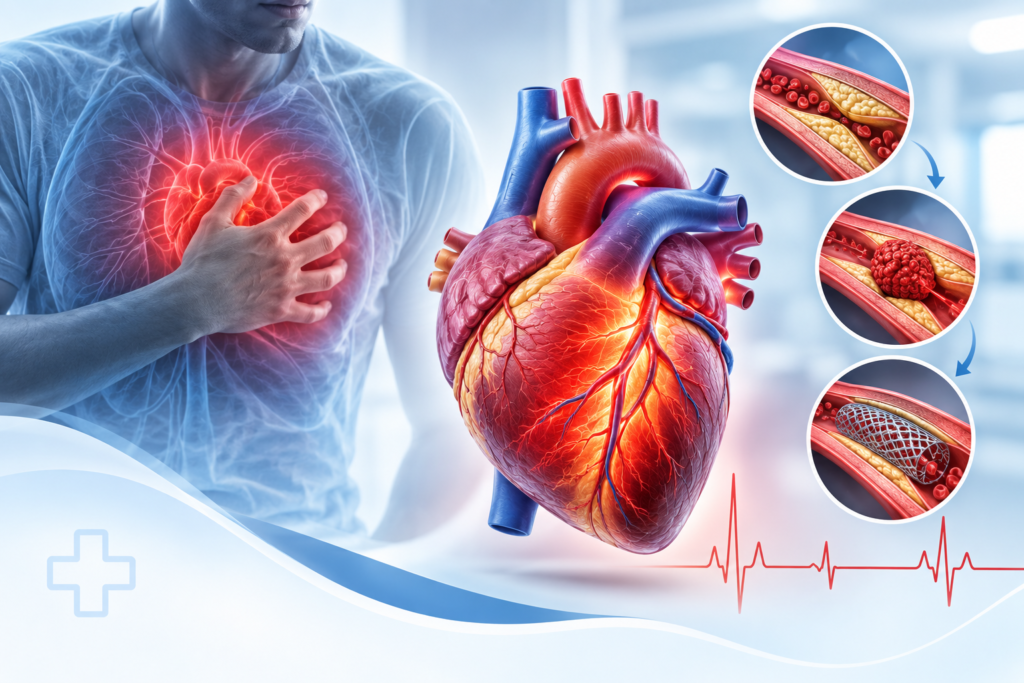
What Happens During a Heart Attack?
A heart attack occurs when blood flow to part of the heart muscle becomes reduced or blocked, often because of a blockage in a coronary artery. When the heart muscle does not receive enough oxygen-rich blood, damage can begin to occur.
Heart attack treatment focuses on restoring blood flow as quickly as possible, limiting further damage to the heart muscle and reducing the risk of serious complications.
Depending on the type of heart attack and the patient’s condition, treatment may include medicines, coronary angiography, angioplasty with stent placement or, in selected cases, other procedures such as bypass surgery.
Our Approach
Comprehensive Care at Every Step
Emergency Evaluation
Rapid assessment of symptoms, ECG and other necessary investigations.
Diagnostic Tests
ECG, blood tests and cardiac imaging help determine the condition of the heart.
Angiography & Angioplasty
Coronary angiography identifies blockages, while PCI/angioplasty can restore blood flow when indicated.
In-Hospital Care
Monitoring and medical management during the immediate recovery period.
Recovery & Rehabilitation
Guidance regarding medicines, lifestyle and appropriate cardiac recovery.
Long-Term Follow-up
Continued cardiac care to manage risk factors and support heart health.
How Is a Heart Attack Diagnosed?
Dr. Himanshu Parashar
MBBS, MD(Medicine), DNB(Cardiology), MCSI, IAMACC(America)
When a heart attack is suspected, the medical team quickly evaluates the patient’s symptoms, medical history, vital signs and overall condition. The aim is to determine whether a heart attack has occurred, identify the type of heart attack and assess how urgently treatment is needed.
An ECG (Electrocardiogram) is one of the first important tests. It records the electrical activity of the heart and can show changes associated with a heart attack. If the initial ECG does not provide a clear answer, repeat ECGs may be performed, especially when symptoms continue or the clinical condition changes.
Blood tests, particularly cardiac troponin, help detect injury to the heart muscle. Troponin levels may be measured and repeated over time depending on the situation. Doctors may also use an echocardiogram to assess heart structure, pumping function and areas of abnormal heart movement.
Treatment Overview
When is heart attack treatment needed?
Heart attack treatment is needed when symptoms and investigations indicate a heart attack or acute coronary syndrome. Early treatment aims to restore blood flow and limit damage to the heart muscle.
How is a heart attack treated?
Treatment depends on the patient’s condition and may include medicines, coronary angiography, angioplasty/PCI and stent placement when clinically indicated.
How is angioplasty performed?
A thin catheter is guided through a blood vessel to the coronary arteries. After identifying the blockage, a balloon may be used to open the narrowed artery and a stent may be placed to help keep the artery open.
Do I need to prepare before treatment?
A suspected heart attack is an emergency, so treatment should not be delayed for preparation at home. The medical team will assess your symptoms, medical history, medicines, allergies and test results.
What are the benefits of early treatment?
Timely treatment can help restore blood flow, limit further heart muscle damage and reduce the risk of serious complications.
Our Location
Expert Cardiac Care Near You
- Monday to Saturday
- 10 AM to 4 PM
Think It's a Heart Attack?
Don't Wait. Every Minute Matters.