Compassionate Care. Advanced Cardiac Treatment
ADVANCED. PRECISE. MINIMALLY INVASIVE.
Coronary Angioplasty (PTCA)
A minimally invasive cardiac procedure to open narrowed or blocked coronary arteries, improve blood flow to the heart and relieve symptoms caused by reduced blood supply.
Advanced PCI Treatment
Balloon Angioplasty & Stenting
Improved Coronary Blood Flow
Expert Interventional Cardiac Care
Suspected Heart Attack?
Don't Wait. Every Minute Matters.
Understanding Coronary Angioplasty

Coronary angioplasty, also known as Percutaneous Transluminal Coronary Angioplasty (PTCA) or Percutaneous Coronary Intervention (PCI), is a minimally invasive procedure used to widen a narrowed or blocked coronary artery. These arteries supply oxygen-rich blood to the heart muscle, and narrowing can reduce blood flow and cause symptoms such as angina or, in some situations, contribute to a heart attack.
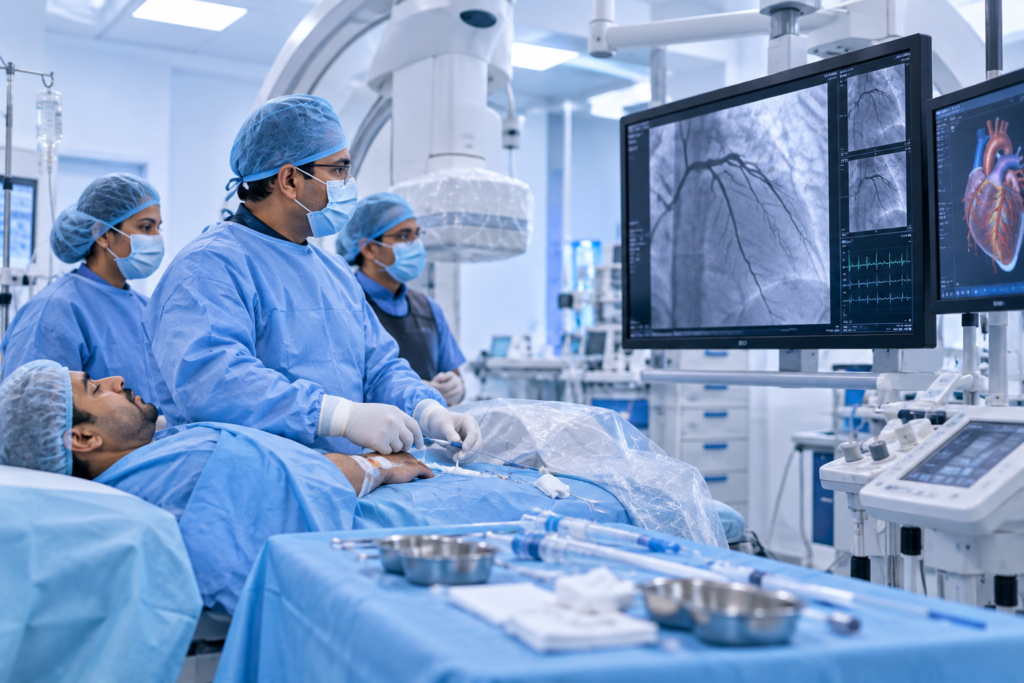
During angioplasty, a thin catheter is guided through a blood vessel toward the affected coronary artery. A small balloon is positioned at the narrowed area and inflated to widen the artery and improve blood flow. A stent may be placed to help keep the artery open.
Coronary angioplasty may be considered for selected patients with significant coronary artery disease, particularly when symptoms are not adequately controlled with medication or when restoring blood flow is urgently required, such as during certain heart attacks. The decision depends on the patient’s symptoms, coronary anatomy, overall health and clinical situation.
The goal of PCI is to restore or improve blood flow through the treated coronary artery. For appropriate patients, it may help relieve angina and improve the ability to perform activities that were limited by reduced blood flow.
Our Approach
Comprehensive Care at Every Step
Detailed Cardiac Assessment
Your symptoms, medical history, previous investigations and overall cardiovascular condition are reviewed to determine whether angioplasty is appropriate.
Coronary Angiography
Coronary angiography helps identify the location and severity of narrowing or blockage and provides important information for planning PCI.
Balloon Angioplasty
A small balloon is guided to the narrowed area and carefully inflated to widen the artery and improve blood flow.
Stent Placement
When appropriate, a small wire-mesh stent may be placed to help keep the treated artery open and support continued blood flow.
Careful Monitoring
Heart rhythm, blood pressure and the catheter access site are monitored during and after the procedure to support safe recovery.
Recovery & Long-Term Care
After angioplasty, prescribed medicines, follow-up care, heart-healthy lifestyle measures and, when appropriate, cardiac rehabilitation are important parts of ongoing care.
What Happens During Coronary Angioplasty?
Dr. Himanshu Parashar
MBBS, MD(Medicine), DNB(Cardiology), MCSI, IAMACC(America)
Before the procedure, your cardiologist reviews your symptoms, medical history, medicines, allergies and relevant investigations. Blood tests and other assessments may be performed, and coronary angiography is generally used to identify the location of the blockage before or as part of the PCI procedure. Your medical team will provide specific instructions regarding medicines, food and other preparation based on your individual situation.
During the procedure, you are usually awake and given local anaesthesia at the catheter insertion site. A thin catheter is introduced through an artery, commonly through the wrist or groin, and guided toward the coronary artery using X-ray imaging. A guidewire and balloon are then positioned at the narrowed area.
The balloon is inflated to widen the narrowed segment and improve blood flow. When a stent is required, it is positioned at the treated area and expanded with the balloon. The stent remains in the artery to help maintain the opening.
After the procedure, the catheter is removed and the access site is monitored for bleeding or other complications. Depending on the reason for angioplasty, the complexity of the procedure and your overall condition, you may be able to go home the same day or may require hospital observation.
Chest Pain Evaluation
When is coronary angioplasty recommended?
Angioplasty may be recommended when a coronary artery is significantly narrowed or blocked and restoring blood flow is considered appropriate. It may be used for selected patients with symptomatic coronary artery disease and can also be an emergency treatment during certain heart attacks.
How is coronary angiography performed?
A thin catheter is inserted through an artery, usually at the wrist or groin, and guided toward the heart. Contrast dye is injected through the catheter and X-ray images are taken to visualize the coronary arteries.
Do I need to prepare before angiography?
Preparation depends on your medical condition and the type of procedure planned. Your healthcare team may review your medicines, allergies, kidney function and other relevant factors and will give you specific instructions about eating, drinking and medications.
hat are the benefits of angiography?
Angiography provides detailed information about the coronary arteries and can help identify the location and severity of narrowing or blockage. This can help the cardiologist determine the most appropriate treatment strategy.
Can angioplasty be performed during the same procedure?
In selected cases, if a significant blockage is identified and treatment is appropriate, angioplasty and stenting may be performed during the same cardiac catheterization procedure. The decision depends on the patient’s condition and angiographic findings.
Our Location
Expert Cardiac Care Near You
- Monday to Saturday
- 10 AM to 4 PM
Supporting Better Heart Health.
Book a Cardiology Consultation