Angioplasty Without a Stent: Is It Possible?
When someone is diagnosed with a blockage in a heart artery, one of the first questions they may ask is: “Can angioplasty be performed without putting a stent in my heart?”
The answer is yes. Angioplasty without a stent is possible in selected patients. However, it is not suitable for every type of coronary artery blockage. The right treatment depends on the location and severity of the narrowing, the condition of the artery, the patient's symptoms and the overall risk of heart complications.
This article explains how stent-free angioplasty works, the role of drug-coated balloons, potential benefits and limitations, and when a stent may still be necessary.
What Is Angioplasty?
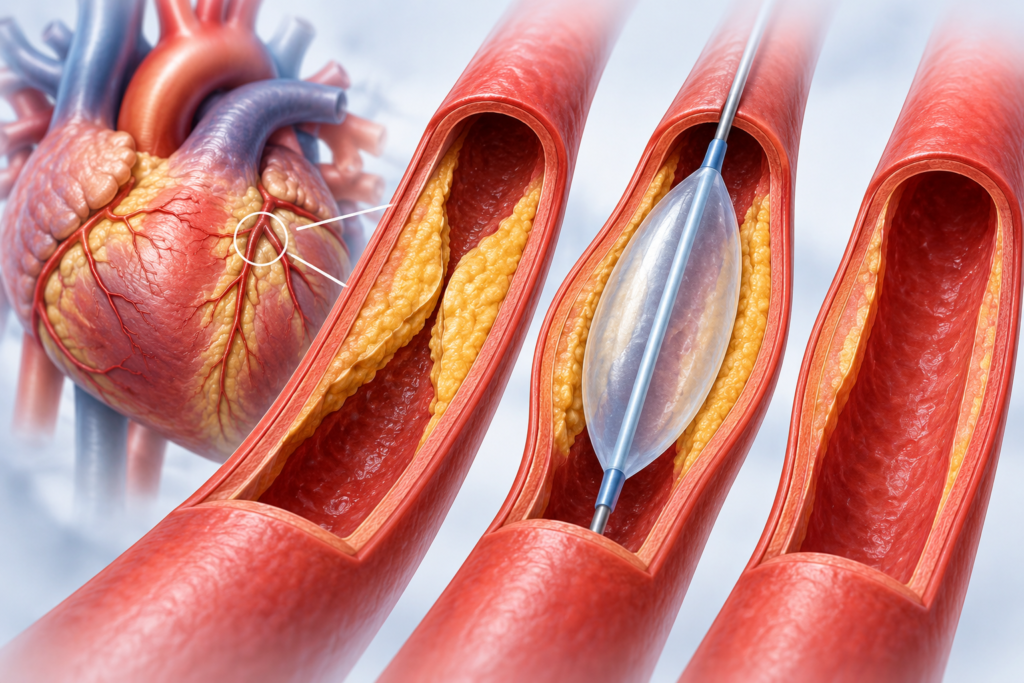
Coronary angioplasty, also called percutaneous coronary intervention (PCI), is a minimally invasive procedure used to improve blood flow through narrowed or blocked arteries supplying the heart.
During the procedure, a cardiologist passes a thin catheter through a blood vessel in the wrist or groin. A small balloon is guided to the narrowed area and inflated to widen the artery.
In many procedures, a small metal mesh tube called a stent is placed inside the artery to help keep it open and reduce the risk of the artery narrowing again.
However, certain patients may be suitable for angioplasty using a balloon without leaving a permanent stent inside the artery.
Can Angioplasty Be Done Without a Stent?
Yes. There are two main approaches to coronary angioplasty without permanent stent implantation.
1. Plain Balloon Angioplasty (POBA)
Plain Old Balloon Angioplasty (POBA) uses a balloon to widen a narrowed coronary artery. The balloon is then deflated and removed, leaving no permanent implant behind.
Although this technique can open an artery, the artery may narrow again because of elastic recoil, tissue healing or scar formation. There is also a risk of artery dissection or sudden closure.
For these reasons, conventional balloon angioplasty alone is not the preferred approach for most routine coronary interventions.
2. Drug-Coated Balloon (DCB) Angioplasty
Drug-coated balloon angioplasty is a specialised technique designed to treat selected coronary artery narrowings without leaving a permanent metal stent.
A drug-coated balloon delivers a medicine to the artery wall during inflation. This medicine helps limit excessive tissue growth, which can contribute to recurrent narrowing.
After the balloon is removed, no permanent stent remains in the treated segment.
Drug-coated balloons have an established role in treating narrowing that develops inside a previously implanted stent, known as in-stent restenosis. They may also be considered for selected new blockages, including certain small-vessel lesions, when the clinical evidence, anatomy and procedural result support this approach.
A drug-coated balloon is not automatically better than a stent. Patient selection and careful preparation of the narrowed artery are essential.
Who May Be Suitable for Angioplasty Without a Stent?
A cardiologist may consider a stent-free approach in selected situations, such as:
- Narrowing inside a previously placed stent: Drug-coated balloons can treat in-stent restenosis without adding another metal layer.
- Blockages in small coronary arteries: In suitable cases, a drug-coated balloon may help avoid placing a stent in a small vessel.
- Selected new coronary blockages: Stent-free treatment may be considered if the narrowing can be adequately treated and the artery remains stable after balloon inflation.
- Certain complex anatomical situations: Some lesions may benefit from avoiding additional layers of metal, depending on their location and characteristics.
Not every patient with these features will be suitable. The final decision depends on coronary angiography, the response to balloon treatment and the risk of complications.
What Are the Advantages of Stent-Free Angioplasty?
When appropriately selected, angioplasty without a permanent stent may offer several potential advantages.
- No permanent metal implant: A stent is not left behind in the treated artery.
- Avoidance of additional stent layers: This can be particularly relevant when treating narrowing inside a previously implanted stent.
- Potentially less metal-related burden in small vessels: In selected small-vessel lesions, a drug-coated balloon may provide a treatment option without leaving a permanent scaffold.
- Potential for a shorter course of combined antiplatelet therapy in selected patients: The required duration depends on the clinical situation, procedure and bleeding risk.
Stent-free treatment does not mean that antiplatelet medicines can automatically be stopped or avoided. These potential advantages must be weighed against the risk of the artery narrowing again or developing a complication during the procedure.
What Are the Limitations of Angioplasty Without a Stent?
Stent-free angioplasty is not suitable for every blockage. Potential limitations include:
- Re-narrowing of the artery: The treated segment may narrow again over time.
- Elastic recoil: The artery may contract after the balloon is removed.
- Artery dissection: Balloon inflation can create a tear in the inner layers of the artery.
- Need for emergency stenting: If the artery does not remain adequately open or blood flow becomes compromised, a stent may be required to restore stability.
A satisfactory result after balloon treatment is essential before the cardiologist decides not to implant a stent.
Is a Stent Better Than a Drug-Coated Balloon?
Neither treatment is best for every patient. They serve different purposes, and the choice depends on the type of blockage and the evidence supporting each approach.
A modern drug-eluting stent provides structural support to the artery and releases medication to reduce tissue growth inside the stent. This makes it an established treatment for many coronary artery blockages.
A drug-coated balloon delivers medication without leaving a permanent implant. It is particularly useful in selected cases of in-stent restenosis and may be appropriate for certain other lesions.
For many routine coronary interventions, especially when the artery requires mechanical support, a drug-eluting stent remains the preferred option.
The goal is not simply to avoid a stent. The goal is to restore blood flow safely and achieve a durable result with the most appropriate treatment.
Can Angioplasty Without a Stent Be Performed During a Heart Attack?
Treatment during a heart attack requires urgent assessment. The priority is to restore blood flow to the affected heart muscle as quickly and safely as possible.
In many patients with an acute heart attack, stent implantation is an important part of primary PCI. A stent-free approach may be considered only in selected circumstances when the anatomy and procedural findings make it appropriate.
Patients should not delay emergency treatment because they wish to avoid a stent. The decision must be guided by the urgency of the condition and the safest effective treatment.
Medical emergency: If you experience persistent chest pain, breathlessness, sweating, faintness or other symptoms suggestive of a heart attack, seek emergency medical care immediately.
Does Angioplasty Without a Stent Mean No Medicines Are Needed?
No. Even when no stent is implanted, medicines may still be necessary to reduce the risk of future heart problems.
Depending on the diagnosis, treatment may include cholesterol-lowering medicines, antiplatelet medicines, medicines for blood pressure or angina, and treatment for diabetes or other risk factors.
Never stop aspirin, clopidogrel or another prescribed antiplatelet medicine without consulting your treating cardiologist. The appropriate treatment and duration depend on your condition and the procedure performed.
How Is the Decision Made in Karnal?
For patients being evaluated for coronary angioplasty in Karnal, the decision to use a stent or a stent-free approach begins with a detailed review of the coronary angiogram and the patient's clinical condition.
The cardiologist considers:
- The location, length and severity of the blockage.
- The size of the affected artery.
- Whether the blockage is new or has developed inside a previous stent.
- The presence of calcification, branching vessels or other complex features.
- The result after balloon treatment, including residual narrowing, blood flow and any dissection.
- The patient's bleeding risk, other medical conditions and treatment preferences.
In selected cases, additional imaging or physiological assessment may help guide treatment decisions.
A consultation with an interventional cardiologist in Karnal can help patients understand their angiography findings and discuss the benefits, limitations and risks of the available treatment options.
Frequently Asked Questions
Can a 90% heart blockage be treated without a stent?
The percentage of narrowing alone does not determine whether stent-free angioplasty is appropriate. The artery's location, size, anatomy, blood flow and response to treatment are also important. Many severe blockages require a stent, while selected lesions may be suitable for another approach.
Is drug-coated balloon angioplasty safe?
Drug-coated balloon angioplasty can be an appropriate treatment in carefully selected patients. Its suitability depends on the type of lesion, adequate lesion preparation and the final procedural result. Like all coronary procedures, it carries potential risks and cannot guarantee that the artery will remain open permanently.
Can a drug-coated balloon be used instead of a stent?
Yes, in selected cases. It is an established option for many cases of in-stent restenosis and may be considered for certain new coronary lesions. It cannot replace stenting in every patient.
Will I need blood-thinning medicines after stent-free angioplasty?
You may still need antiplatelet medicines. The type and duration depend on your clinical condition, the device used, the procedural result and your bleeding risk. Follow your cardiologist's prescription.
Can a blockage return after angioplasty without a stent?
Yes. Re-narrowing can occur after balloon angioplasty, including after drug-coated balloon treatment. Follow-up, prescribed medicines and control of risk factors remain important.
Is angioplasty without a stent better than bypass surgery?
These treatments are not interchangeable for every patient. The choice between medicines, PCI and coronary artery bypass grafting (CABG) depends on the pattern and complexity of coronary disease, symptoms, heart function and other clinical factors. Some patients may benefit more from bypass surgery than from PCI.
Conclusion
Angioplasty without a stent is possible, but only when the type of blockage and the final result make it a suitable option. Plain balloon angioplasty and drug-coated balloon angioplasty are different techniques, and neither is appropriate for every patient.
A drug-eluting stent remains an important treatment for many coronary artery blockages. The best approach is the one that safely restores blood flow and provides a suitable long-term result for the individual patient.
For patients in Karnal, discussing the coronary angiogram and available treatment options with a qualified interventional cardiologist can help clarify whether a stent-free approach is reasonable.
Medical Disclaimer
This article is for general educational purposes and does not replace an individual medical consultation. Treatment decisions must be based on the patient's clinical condition, coronary angiography and the treating cardiologist's assessment.
References for Further Reading
- American Heart Association — Coronary Angioplasty
- American College of Cardiology — International Consensus Report on Drug-Coated Balloons
- American College of Cardiology — Drug-Coated Balloon Angioplasty Compared with Drug-Eluting Stents