Compassionate Care. Advanced Cardiac Treatment
STEADY. RELIABLE. ADVANCED.
Pacemaker
Specialized pacemaker care for selected heart rhythm conditions, helping maintain a more regular heartbeat and supporting safer, more active daily living.
Advanced Rhythm Management
Pacemaker Evaluation & Implantation
Heart Rhythm Monitoring
Personalized Follow-up Care
Suspected Heart Attack?
Don't Wait. Every Minute Matters.
Understanding Pacemaker Treatment
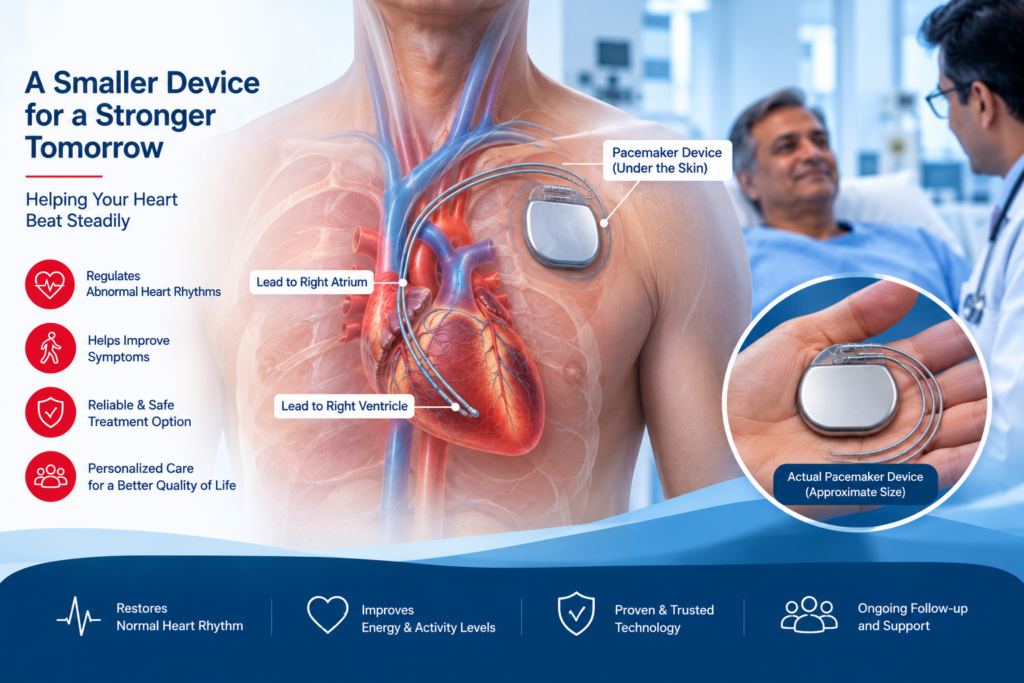
A pacemaker is a small electronic device designed to help control an abnormally slow or irregular heartbeat. It delivers carefully timed electrical impulses when the heart’s natural rhythm is not maintaining an adequate rate.
A pacemaker may be recommended for certain patients with conditions such as significant bradycardia, heart block or other rhythm disturbances where the heart’s electrical system is not working properly. The decision to implant a pacemaker depends on symptoms, heart rhythm findings and the underlying cardiac condition.
Traditional pacemakers are generally placed beneath the skin near the collarbone, with one or more leads connected to the heart. Some patients may be suitable for leadless pacemakers, which are delivered through a catheter and do not require conventional leads or a chest incision. The appropriate device depends on the patient’s individual needs.
The aim of pacemaker treatment is to maintain an appropriate heart rate and help reduce symptoms related to an abnormal or excessively slow rhythm. Regular follow-up is important to check the device, leads and battery and to ensure that the pacemaker continues to function appropriately.
Our Approach
Comprehensive Care at Every Step
Detailed Rhythm Assessment
Your symptoms, medical history, ECG findings and heart rhythm are assessed to understand whether a pacemaker may be appropriate.
Pacemaker Evaluation
The cardiology team evaluates the underlying rhythm problem and considers whether pacing is required based on your individual condition.
Device Selection
Different pacemaker systems are available. The most appropriate type depends on the patient's heart rhythm, anatomy and clinical requirements.
Pacemaker Implantation
For a conventional pacemaker, the device is placed beneath the skin near the collarbone and connected to the heart through specially positioned leads.
Post-Procedure Monitoring
Heart rhythm, vital signs and the implantation site are monitored after the procedure. The device is checked to ensure it is functioning correctly.
Long-Term Device Follow-up
Regular pacemaker checks help assess battery status, lead function and device performance. Your cardiology team will advise you about the appropriate follow-up schedule.
What Happens During Pacemaker Implantation?
Dr. Himanshu Parashar
MBBS, MD(Medicine), DNB(Cardiology), MCSI, IAMACC(America)
Before pacemaker implantation, your cardiologist reviews your symptoms, ECG or rhythm-monitoring results, medical history and other relevant investigations. Depending on your condition, blood tests, chest X-ray or echocardiography may also be performed before the procedure.
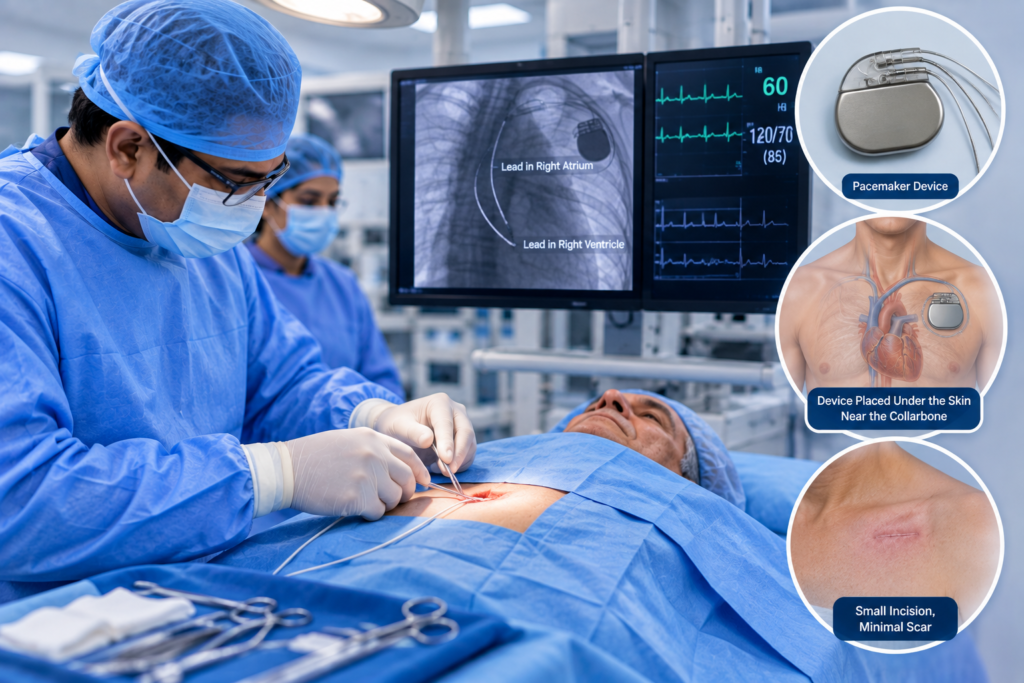
For a conventional pacemaker, the procedure is generally performed using local anaesthesia, sometimes with medication to help you relax. A small incision is made near the collarbone and the pacemaker leads are guided through a vein into the appropriate chambers of the heart under imaging guidance.
The pacemaker generator is placed beneath the skin and connected to the leads. The device is then tested and programmed according to the patient’s heart rhythm and clinical requirements. In selected patients, a leadless pacemaker may be implanted through a catheter instead of using a traditional chest incision and leads.
After implantation, the wound and heart rhythm are monitored and the pacemaker is checked before discharge. Depending on the procedure and individual condition, some patients may need hospital observation. Follow-up appointments are important to monitor the device and its battery over time.
Pacemaker – Frequently Asked Questions
When is a pacemaker recommended?
A pacemaker may be recommended when the heart beats too slowly or when problems with the heart’s electrical conduction cause an abnormal rhythm. Conditions such as significant bradycardia and certain types of heart block may require pacemaker treatment.
What symptoms may indicate a need for pacemaker evaluation?
Symptoms can vary depending on the underlying rhythm problem. Dizziness, fainting or near-fainting, unusual tiredness, reduced exercise tolerance and symptoms related to a slow heartbeat may require cardiac evaluation.
How is a pacemaker implanted?
A conventional pacemaker is generally implanted beneath the skin near the collarbone. One or more leads are guided through a vein into the heart and connected to the pacemaker generator. The device then provides electrical impulses when needed.
Do I need to prepare before pacemaker implantation?
Preparation depends on your health condition and the type of procedure planned. Your cardiology team may review your medicines, allergies, blood tests and other investigations and provide specific instructions about eating, drinking and medications before the procedure.
What are the benefits of a pacemaker?
For appropriate patients, pacemaker treatment can help maintain a more regular heart rate and reduce symptoms associated with certain slow or abnormal heart rhythms. It may improve day-to-day functioning and quality of life when the underlying condition is appropriately treated.
Our Location
Expert Cardiac Care Near You
- Monday to Saturday
- 10 AM to 4 PM
Supporting Better Heart Health.
Book a Cardiology Consultation