Compassionate Care. Advanced Cardiac Treatment
COMPASSIONATE. COMPREHENSIVE. CONTINUOUS.
Heart Failure Clinic
Specialized evaluation and ongoing care for people with heart failure, focused on understanding symptoms, assessing heart function, managing contributing conditions and supporting better day-to-day health.
Comprehensive Heart Failure Evaluation
Advanced Cardiac Assessment
Personalized Treatment Planning
Long-Term Monitoring & Support
Suspected Heart Attack?
Don't Wait. Every Minute Matters.
Understanding Heart Failure Clinic

Heart failure does not mean that the heart has stopped working. It means that the heart is not pumping or filling well enough to meet the body’s needs. It can develop gradually or occur more suddenly and may affect the left side, right side or both sides of the heart.
Common symptoms can include breathlessness, tiredness, persistent cough, swelling of the feet or ankles, reduced ability to perform usual activities and changes in body weight. Symptoms can vary from person to person and may change as the condition progresses.
Heart failure can have different underlying causes, including coronary artery disease, previous heart attack, high blood pressure, cardiomyopathy, heart-valve disease or abnormal heart rhythms. Identifying the underlying cause is an important part of evaluation and treatment planning.
Heart failure care is individualized. Depending on the type and severity, management may involve medicines, lifestyle measures, monitoring, cardiac rehabilitation and, in selected patients, devices or procedures.
Our Approach
Comprehensive Care at Every Step
Detailed Symptom Assessment
Evaluation of breathlessness, fatigue, swelling, cough, exercise intolerance, palpitations and changes in weight or daily activity.
Heart Function Evaluation
Assessment of heart structure and pumping function, commonly including echocardiography when clinically appropriate.
Blood & Diagnostic Testing
Relevant blood tests, ECG and additional investigations may be recommended based on your symptoms and clinical assessment.
Fluid & Symptom Monitoring
Guidance on tracking symptoms, weight and other changes that may indicate worsening heart failure.
Personalized Treatment Planning
Treatment is tailored according to the type, severity and underlying cause of heart failure.
Long-Term Follow-up
Regular follow-up helps monitor symptoms, treatment response and changes in overall cardiovascular health
What Happens During Heart Failure Clinic
Dr. Himanshu Parashar
MBBS, MD(Medicine), DNB(Cardiology), MCSI, IAMACC(America)
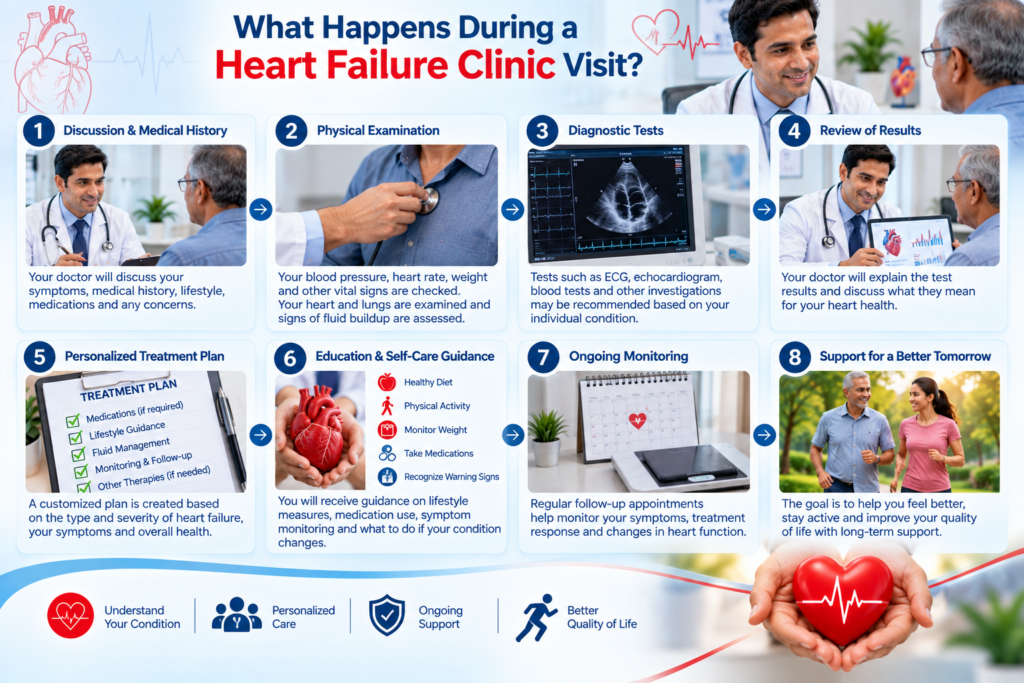
Your appointment begins with a detailed discussion about your symptoms, medical history, medications, previous heart conditions and any changes in your ability to perform normal activities. Your doctor may also ask about symptoms such as breathlessness, swelling, fatigue, cough, palpitations and recent weight changes.
A physical examination may include checking your blood pressure, heart rate and weight, listening to the heart and lungs and looking for signs of fluid buildup such as swelling in the legs or abdomen.
Depending on your individual situation, your doctor may recommend investigations such as an ECG, echocardiogram, blood tests including relevant heart-failure biomarkers, chest imaging, stress testing or other cardiac investigations. An echocardiogram can help assess heart structure, valves and pumping function.
After reviewing the findings, your cardiologist develops an individualized care plan. Depending on the type and severity of heart failure, management may include prescribed medicines, lifestyle measures, symptom monitoring, cardiac rehabilitation or selected device/procedural treatments.
Heart Failure Clinic– Frequently Asked Questions
When should I visit a Heart Failure Clinic?
You should discuss an evaluation with a healthcare professional if you have persistent or worsening breathlessness, unusual fatigue, swelling of the legs or abdomen, unexplained weight changes, reduced exercise tolerance or other symptoms that may indicate heart failure.
How is heart failure diagnosed?
Diagnosis is based on your medical history, symptoms, physical examination and appropriate test results. Tests may include blood tests, ECG, echocardiography and other imaging or cardiac investigations when required
Will I need an echocardiogram?
An echocardiogram is commonly used to assess the structure and pumping function of the heart and can help determine the type of heart failure. Your doctor will decide which tests are appropriate for you.
Can heart failure be treated?
Yes. Although heart failure is a serious long-term condition and treatment depends on the individual, appropriate management can help control symptoms and improve quality of life. Treatment may include medicines, lifestyle measures, rehabilitation and selected devices or procedures.
What should I monitor at home?
Depending on your doctor’s advice, you may be asked to keep track of symptoms such as breathlessness, swelling, fatigue, heart rate and daily weight. Sudden changes should be reported to your healthcare team.
Our Location
Expert Cardiac Care Near You
- Monday to Saturday
- 10 AM to 4 PM
Supporting Better Heart Health.
Book a Cardiology Consultation