Compassionate Care. Advanced Cardiac Treatment
CONTINUOUS. DETAILED. HEART RHYTHM MONITORING.
Holter Monitoring
A portable heart-monitoring test that continuously records your heart rhythm during your usual daily activities, helping identify irregular heartbeats and rhythm-related symptoms that may not appear during a short ECG.
24–48 Hour Rhythm Monitoring
Detects Hidden Rhythm Problems
Symptom & ECG Correlation
Personalized Cardiac Evaluation
Suspected Heart Attack?
Don't Wait. Every Minute Matters.
Understanding Holter Monitor
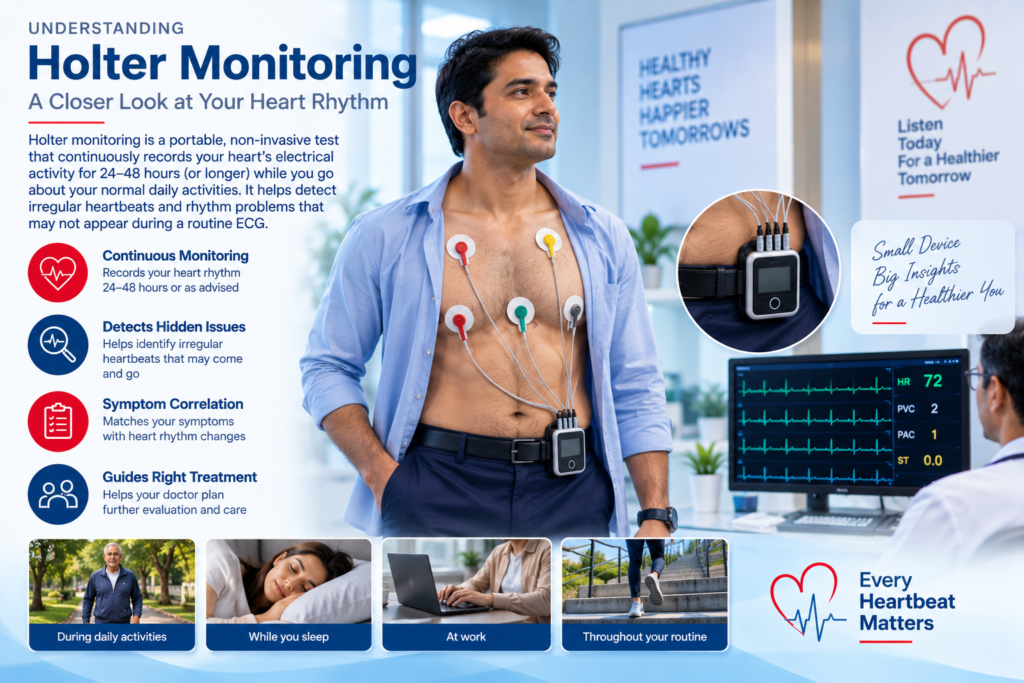
A Holter monitor is a small, portable device that continuously records the heart’s electrical activity while you go about your normal daily routine. Unlike a standard ECG, which records the heart rhythm for only a short period, Holter monitoring provides a longer view of how the heart behaves throughout the day and night.
Holter monitoring may be recommended when a patient experiences symptoms such as palpitations, a racing or irregular heartbeat, dizziness, unexplained weakness or episodes of fainting, particularly when these symptoms are not present during a routine ECG.
The monitor records electrical signals from the heart through small adhesive electrodes placed on the chest. The recorded information can then be reviewed to look for abnormal rhythms, pauses, unusually fast or slow heart rates and changes that may correspond with symptoms.
Holter monitoring can be especially useful when symptoms occur intermittently. The information obtained from the recording may help the cardiologist decide whether additional testing, monitoring or treatment is appropriate.
Our Approach
Comprehensive Care at Every Step
Detailed Rhythm Assessment
Evaluation of symptoms, medical history and possible heart-rhythm concerns before monitoring.
Continuous ECG Recording
Extended recording provides a broader picture of heart rhythm than a routine ECG.
Palpitation Evaluation
Helps investigate episodes of racing, pounding, fluttering or irregular heartbeat.
Fainting & Dizziness Assessment
Can help identify rhythm abnormalities that may contribute to unexplained symptoms.
Symptom-Rhythm Correlation
Patient-recorded symptoms can be compared with the heart rhythm captured during the same period.
Results & Personalized Follow-up
The findings are reviewed by the cardiologist to determine whether further evaluation or treatment is required.
What Happens During Holter Monitor
Dr. Himanshu Parashar
MBBS, MD(Medicine), DNB(Cardiology), MCSI, IAMACC(America)
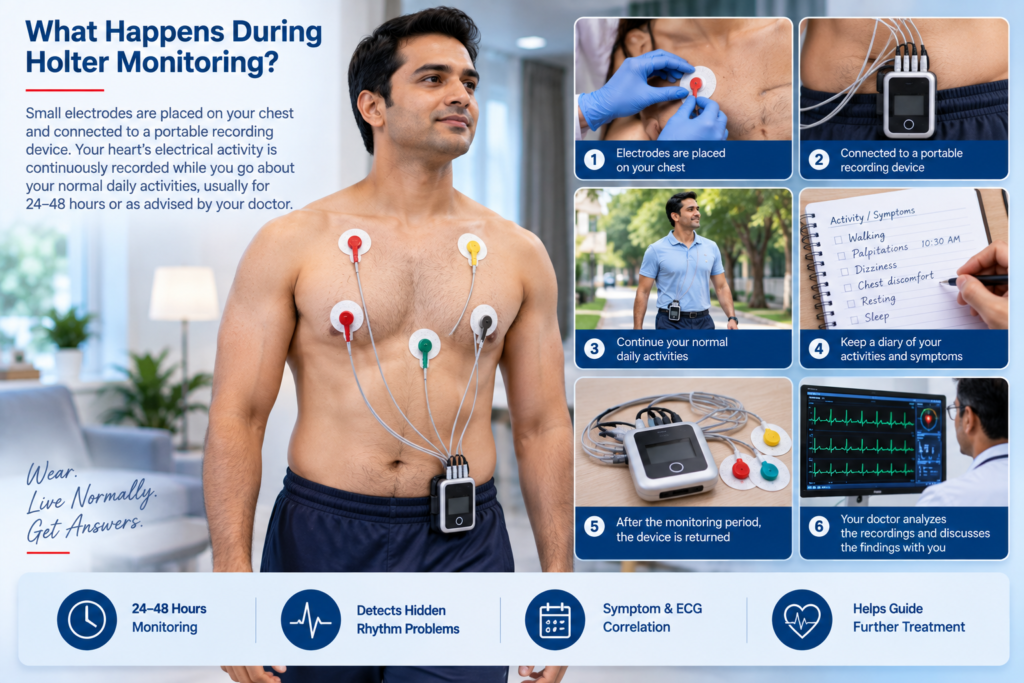
Before the monitor is attached, the doctor reviews your symptoms and medical history and explains how to use the device. Small areas of the chest may be prepared so that the electrodes can remain securely attached during monitoring.
The electrodes are placed on the chest and connected to a small recording device. Depending on the type of monitor and the clinical reason for testing, monitoring may continue for 24 hours or longer.
You can generally continue many of your usual daily activities while wearing the monitor. You may also be asked to keep a diary of symptoms and activities, such as palpitations, dizziness, chest discomfort or unusual shortness of breath, along with the time they occurred.
After the monitoring period, the device is returned and the recorded information is analyzed. Your cardiologist reviews the findings and compares them with your symptoms to determine whether an abnormal heart rhythm was detected and whether further evaluation is needed.
Holter Monitor– Frequently Asked Questions
When is Holter monitoring recommended?
It may be recommended for patients with intermittent palpitations, suspected abnormal heart rhythms, unexplained dizziness or fainting, episodes of unusually fast or slow heartbeat, or when a routine ECG has not provided enough information.
How is Holter monitoring performed?
Small adhesive electrodes are placed on the chest and connected to a portable recording device. The device continuously records the heart’s electrical activity for the prescribed monitoring period.
Is any preparation required?
Your doctor may advise you about medications, bathing restrictions and other instructions before the monitor is fitted. The chest should generally be clean and dry so that the electrodes remain attached properly.
Can I continue my normal activities?
Most routine daily activities can usually be continued. However, depending on the device being used, you may need to keep it dry and avoid activities that could damage the monitor or cause the electrodes to come loose.
What are the benefits of Holter monitoring?
The main advantage is prolonged heart-rhythm recording. It may detect rhythm abnormalities that are missed during a short ECG and can help correlate symptoms with changes in heart rhythm.
Our Location
Expert Cardiac Care Near You
- Monday to Saturday
- 10 AM to 4 PM
Supporting Better Heart Health.
Book a Cardiology Consultation